Hans Rosling: The only way to stop population growth.. is to increase child survival rates.
... even if it sounds contradictory: Increasing child survival rates will stop population growth. With thanks to GB for the link! Read the full post...

Captured on mobile phones, both by Tamils under attack and government soldiers as war trophies, the disturbing footage shows the extra-judicial executions of prisoners; the aftermath of targeted shelling of civilian camps; and dead female Tamil fighters who appear to have been raped or sexually assaulted, abused and murdered.
The film is made and broadcast as UN Secretary-General Ban Ki-moon faces growing criticism for refusing to launch an investigation into 'credible allegations' that Sri Lankan forces committed war crimes during the closing weeks of the bloody conflict with the Tamil Tigers.
In April 2011, Ban Ki-moon published a report by a UN-appointed panel of experts, which concluded that as many as 40,000 people were killed in the final weeks of the war between the Tamil Tigers and government forces.
It called for the creation of an international mechanism to investigate alleged violations of international humanitarian law and international human rights law committed by government forces and the Tamil Tigers during that time.
This film provides powerful evidence that will lend new urgency to the panel's call for an international inquiry to be mounted, including harrowing interviews with eye-witnesses, new photographic stills, official Sri Lankan army video footage, and satellite imagery. (Full article)

“Germplasm collection”, “allele diversity”, “Crop registers”, might sound like mystic academic terms to you. Likewise for me, I could hardly link them into the discussion about climate change and food security…. Until I visited the genebank on the ICRISAT campus near Hyderabad in India.
The International Crops Research Institute for the Semi-Arid Tropics (ICRISAT) is a non-profit organization conducting agricultural research for development in Asia and sub-Saharan Africa. ICRISAT is part of a consortium of similar agricultural research centers supported by the Consultative Group on International Agricultural Research (CGIAR).
…and they have a bank. Not to store money or gold, but to safeguard something much more precious: the genetic material – or “germplasm”- of 119,000 “accessions” -or varieties- of sorghum, pearl millet and six other types of small millets, chickpea, pigeonpea and groundnut, collected from 144 countries.
“Genetic diversity is key to the future”
Over thousands of years, different food crops have evolved into zillions of different varieties, either grown as a cultivated crop, or flourishing in the wild. Each variety differs from the next in the way it naturally adapted its genetic code to the environment it grows in: how it deals with drought or a high soil salinity, how it built up resistance to certain pests. Many differ in their yield, size, leaves or roots.
 But, as Bob Dylan sung: “Times are a-changing”. Farmers now often concentrate on monocultures, or grow only a selection of high yielding crops. Commercial companies have been “successful” in promoting certain varieties, which farmers adopted quickly, and –thanks to globalization- were spread widely. Understandably so, as “the world needs to produce more food”. However, all of this became nefast for the bio-diversity: Today, the rate in which traditional seed varieties disappear, is higher than ever.
This stands in stark contrast with the demand for more and specialized seed varieties, adapted to the ever changing weather patterns. If the genetic biodiversity disappears, where will we find the seed varieties helping farmers to cope with future environmental changes?
Unless if we safeguard our existing seed varieties for the wide range of crops the world grows, we will no longer have the genetic material to re-generate seeds adapted to the future climate changes.
And that is where genebanks come in. Genebanks like the one I was standing in this morning, at ICRISAT.
Read my full post on the CCAFS blog.


- Emergency seed aid should be used only to address emergency problems, and those in which seed security is a problem. Note that current farmer projections for August/September 2010 suggest that farmers can access the seed they need.
- Any seeds made available to farmers through aid interventions have to be shown to a) be adapted to local conditions, b) fit well with farmers preferences, and c) be of a quality ‘at least as good’ as what farmers normally use. One should never introduce varieties in an emergency context which have not been tested in the given agro-ecological site and under farmers’ management conditions. (..)
- Direct Seed Distribution (DSD) is best used when there are problems of seed availability.(Several agro-dealers in Léogâne indicated they had substantial supplies of maize seed unsold while free seed aid was being delivered. Business was being compromised at the critical moment it needed to be strengthened. While Léogâne is somewhat unique in currently having an input dealer network, such outlets will likely become more numerous in near future: these should be supported, rather than undermined). (...)
- Novel improved varieties should generally not be introduced to a broad population in the context of an emergency distribution. (...)
On August 19 2003, the UN headquarters in Baghdad was bombed, killing 22 people and maiming others for the rest of their lives. Humanitarian aid would never be the same after that.
To remember this event, the humanitarian community decided to call August 19 "World Humanitarian Day". This year is clearly in a lighter note, celebrating "us", and the work we do while still remembering the hundreds that died while trying to help others... (More)

Watching the images on TV, and reading the reports, it is impossible to stay untouched by the misery caused by the massive Pakistani monsoon floods.
As an aidworker watching (for the moment), from the sideline, I have three thoughts that might make me unpopular in the aid community:

Seriously. Humanitarian aid is complex. Seriously complex. And open for ab-use, miss-use,.. and wrong-use. As an aidworker, I am standing in the midst of it all, often shaking my head in disbelief. Part of me gets cynical and sarcastic at times. Specifically when it concerns something that starts with good intentions. But then the road to hell is paved with good intentions: It is not because you mean "well", that you do "well".
Yesterday I got really cynical. I aired some of it on Twitter, suggesting a number of initiatives which I meant as sarcastic jokes, only to find out some of those stupid suggestions had actually been implemented. Seriously.
I also found fellow aidworker/blogger "Tales from the Hood" wrote about the same subject, Twitter-tagging it "#SWEDOW" - or "Stuff WE DOn't Want".
Let me just list the initiatives I meant as a joke yesterday (mostly inspired by 1millionshirts), with after-thoughts between "[ ]":
And while I was at it, I also found ways to get rid of your 1millionOldBras...
>> at this point fellow aid-fanatic @Katrinskaya intervened and pointed to her excellent post #1millionsextoys for Africa. Yeah!
Picture courtesy CordAid
In Badakshan, the Northeast of Afghanistan, 6 women die in labour for every 100 babies born. That is almost four times the national average, in a country with the world's second highest maternal mortality rate...
Let's use Mother's Day weekend to think of those mothers in less fortunate countries. Maternal health continues to be a challenge for many in remote areas, where access to clinics or even primary care is non-existent. Or only exists only through WHO (the UN's World Health Organisation)mobile clinics as shown in this video. (More)

Update:
Comments are closed on this post, and the nominations are included in the poll.Cast your vote on this post. The results are out - see this post.


 MSF began with the "Top Ten" list in 1998, when a famine in southern Sudan went largely unreported in the US media. Maybe due to the CNN effect ("no media attention, no aid pesos"), MSF went a more commercial course last year, converting "the most Underreported Crisis" list, to "the Top 10 Humanitarian Crisis".

 It is not often we let authors present their own book, here on The Road. This time, I make an exception. It is not often we stumble upon books with new and positive ideas, after all.
When Jaime Pozuelo-Monfort told me about his new book, "The Monfort Plan" (available on Amazon and via Wiley Finance), I asked him two things: to summarize his book, and to answer a number of questions I have in an interview. Today, we feature Jaime's book summary:The Monfort Plan (Wiley Finance, April 2010) presents the new architecture of a redefined capitalism. This summary piece introduces the five year action plan and explains why a new architecture may be needed in today’s environment.
Today’s capitalism is based on a vintage architecture that dates back to the 1940s and the American effort to pull the world away from Nazi Germany and Soviet communism. It was then when the four institutions of this old architecture were designed: the World Bank, the International Monetary Fund, the United Nations and the GATT. The old architecture designed by the Bretton Woods elites served a purpose: it contributed to the economic resurgence of Western Europe and brought peace to a continent that had fought wars for centuries.
Subsequent to the design of the new architecture the Truman Administration proposed and implemented the Marshall Plan, the plan for the economic recovery of 17 countries in Western Europe. The plan enabled the vision of Jean Monnet to come up with a European Community of Coal and Steel, the parent of the European Union. These were times of courage and vision. The great changes of the 1940s and 1950s were precipitated by the devastation of the two World Wars and the economic collapse of the Great Depression. The environment set the basis for thirty years of phenomenal economic growth on both sides of the Atlantic.
The second half of the twentieth century had two flavours that modeled the world's geo-political pattern of both Hemispheres: the cold war and the emergence of neoclassical economics fathered by Milton Friedman and Alan Greenspan and implemented by Ronald Reagan and Margaret Thatcher. Neoclassical economics brought about an increasing mathematical sophistication where economic sub-fields such as financial economics prospered thanks to the work of gifted mathematicians such as Merton, Black or Scholes. Monodimensional utility functions prioritized profit maximization over other variables such as human dignity or environmental sustainability. Academia was captured in the allure of models. Our economic policy-makers were constrained by mathematical models that worked on paper.
We continued to live in the world of the nation-state that defends a realist foreign-policy agenda based on the welfare of its citizens and the non-cooperation of states. Priorities were national but not global. A silent cold war was fought in the Northern Hemisphere, with cruel civil wars taking place throughout the Second World War, aggravated by the supplies of either side.
Major changes have to be brought on board if the great evils of our time persist. Today’s world continues to be a world dominated by extreme poverty and inequality. Today’s world maintains a status quo where a vintage architecture works for the developed world. We are reluctant or unable to move forward because we are afraid of losing the privileges the old architecture awarded to the victors of World War II. We are unwilling to reform because our political elites are afraid to lose popular support if they remove agricultural subsidies, or give up representative power at the Bretton Woods Institutions.
When approaching the geo-political environment of a world in desperate need of creative policy-making it is easier to propose a radically different new architecture, designed to cope with the challenging and increasing problems of the planet, than it is to reform the current architecture. Today’s crisis opens up a window of opportunity where intellectual exercises that propose new ideas ought to be considered by our political elites. But this will not happen. There is a gap between the world of creative policy-making and the inability of our political elites to embrace change and reform. Our political elites continue to live in the world of the nation-state, where citizens reward myopic policy-making that prioritizes our interest over that of the vulnerable.
The reality is that there is only one way out of the crisis with many possible final destinations: we have to incorporate the extremely poor countries to a new order where we undertake reform conducent to the elimination of the great evils of our time.
The Monfort Plan proposes a five year action plan to redefine capitalism and eradicate extreme poverty. The Monfort Plan also presents the team of one hundred Expert Dreamers that could be brought on board to implement the action plan. The action plan gives specific detail on how to accomplish change starting in six countries of Subsaharan Africa that have shown their determination to build up a basis upon which they can prosper.
The Monfort Plan reviews and identifies today’s vulnerabilities and explains why the current order is perpetuated. It then proposes an Axis of Feeble that has to be defeated. In order to do so reform has to be brought on board of six areas, namely agriculture, trade and labour rights, extractive industries, small arms trade, international financial architecture and brain drain.
In the book the lessons from the success of the Marshall Plan are drawn. The action plan proposes a new Marshall Plan for Africa, called the Annan Plan that would boost agricultural productivity on Subsaharan African soil. It also proposes four new organizations that would universalize microfinancial services for the extreme poor in order to deliver, through the microfinance network, global public goods including universal healthcare, education, water and sanitation.
The Monfort Plan also proposes innovative financing that could contribute to creating the Poor’s Endowment able to finance the delivery of global public goods through the microfinance network over the next forty years.
The action plan seeks to replicate the success of the European Union in the development space. By creating a supranational organization that accepts new members on an ex-ante conditionality clause, developing countries could have a phenomenal incentive to embrace reform in order to join a new architecture that will deliver global public goods for free to all the extreme poor for for the next forty years, or until the poor leave extreme poverty behind. Economic growth per se is a necessary condition to pursue global prosperity, but in itself does not suffice.
We need to become, one more time, men and women of stature and embrace the vision of the great men of the twentieth century. We need to become disciples of Marshall and Truman to defeat, once and for all, the great evils of our time. There is a window of opportunity. There is no other exit out of the crisis. Let the Glorious Forty begin.
Read on: our interview with Jaime.
More book reviews on The Road.
On September 22, UN Secretary Ban ki-Moon launched a challenge: "Use your voice as a global citizen and tell these leaders in a short video what you think needs to be done to make this world a better and safer place. Be a Citizen Ambassador to the UN."
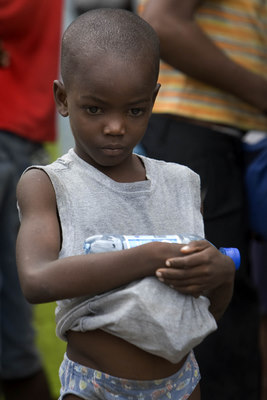


Here are the interesting links I harvested last week:
Tens of thousands of detained refugees from the war in Sri Lanka are threatened by the imminent arrival of monsoon rains in the north of the country, according to an internal United Nations document.
The UN believes that about 66,000 people held in the vast Menik Farm internment camp since May face a humanitarian disaster when the rains start, bringing the spectre of disease. Officials have urged the government to move those whose tents are most likely to be flooded by a mixture of rain and sewage. (Full)

 Peter. Flemish, European, aid worker, expeditioner, sailor, traveller, husband, father, friend, nutcase. Not necessarily in that order. Peter. Flemish, European, aid worker, expeditioner, sailor, traveller, husband, father, friend, nutcase. Not necessarily in that order. |


© Blogger template The Business Templates by Ourblogtemplates.com 2008
Back to TOP


The Road's Dashboard
Log in
New
Edit
Customize
Dashboard