Video: The Girl Effect
We have covered advocacy campaigns by nonprofit organisations in the past. Here is a very simple non-pretentious video by The Girl Effect.
Simple is powerful.
We have covered advocacy campaigns by nonprofit organisations in the past. Here is a very simple non-pretentious video by The Girl Effect.
Simple is powerful.
Yesterday, I spent the whole day interviewing woman near Embu, Kenya. All farmers, looking for ways to adapt their crops, fields, methods, seeds and fertilizers to the changing weather patterns.


This is a post I wrote three years ago. It seems the subject is still ever so close to the hearts of many, so I brought it onto the foreground again.
There are several excellent insights people posted in the comments. I'm interested to hear your point of view.
 In the previous post, Shylock explored, in a ironical, cynical, self-criticizing way, what personal future we, aid workers have. We wonder the earth, gradually getting used to travel all the time, often in harsh places, and very often in search of a thrill. Gradually we get addicted to it all.
But is there life after this.. after this life of a gypsy? Do we become gypsy disasters after years of behaving like a disaster gypsy, roaming from one emergency to the next?
No matter how much we chuckle reading the previous post, in the end, it is not funny. Far from it. Many humanitarian workers have a problem to find 'a life after this'.. But it is even more sad to realize how few actually "have a life even now"... Even now, many forget, or at least compromise, their personal life because of their addiction. The addiction to the horizon, to the adrenaline.
And now I want to you stop for a moment, no matter what you are doing. What I am going to tell you, is very close to my heart...
 No matter how you twist and turn it. The professional world is still a man's world. This world in general is still a man's world. It has been for hundreds of centuries. From the time men dragged women into their cages by their hair, we have come a long way, but we are not there yet. "There" being "offering equal chances, and equal opportunities to women".
Here is how I see it. (and don't forget I am a man, and no matter how hard I try, I will always be a man, even if I try to look at things from a woman's perspective):
 I look around me, and see people -men and women- alike, with loads of personal challenges through the work they do... But then I look again, and see that in most management functions in this business - the humanitarian world -, men hold the key functions (and most of them come from the first world, but let's leave that aside for a moment). I look once more, and see most administrative support positions are filled by women. Many women in this business are strong, well educated, hard working people. Many of them are young, full of energy, inspiration and aspirations. The new generation of women have been encouraged (and enabled) by their parents to get a good education. They are ambitious to develop themselves personally and professionally. Many of these young women whizz through their twenties like a breeze, and some climb up (if all goes well), the professional ladder.
All of a sudden they find themselves in their mid thirties, somewhere in the professional chain and ask "hey where is my personal life gone to?". And that is where the challenges start.
 If all goes well, they find a partner. If all goes well. As we - men - are not always too happy to live with a partner who has a demanding career. Even fewer like it when that career takes 'our woman' away on duty travel. Heaven forbids that 'her career' would even have her live far away from us, in some dark and remote humanitarian crisis area.
"If all goes well" they find a partner, as too often at their mid thirties, what men are "available" on the "partner market"? Those coming out of their first long relationship, and not looking for something long term. The 'celibataires eternelles' or 'commito-fobes'. Those who have not made up their mind what the hell they want. The 'players'. And those already in a relationship. Or those who have failed in relationships so far.. (and all of that is a whole different discussion which I would love to have over a glass of Prosecco).
 So "if all goes well", a partner is found. And then? "A career" you say? In this world where, no matter what, a woman is still supposed to not only bare the children, but also spend most of her time raising them? Where a woman is still supposed to do most of the household stuff? [if you are a man, think about it... If you don't agree with me, think again... Who spends most of the time with the kids, working for/in the house? You or your partner?].
So, what then? Most women are the ones making the compromise then.. Either give up their career, or work part time, etc...
If they don't, the juggle of kids, house, husband and career becomes a full time challenge.
The other evening, I went with E. over all the women we knew. And we tried to flag those we thought had found a good balance between kids, house, husband and career. And are successful in all. We found one. One woman out of the dozens of women we know, we found one.
That is a sad observation. And even more sad, when we realized that lady does not work in the humanitarian "business".
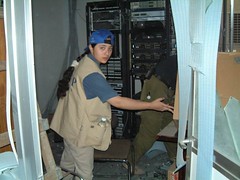 So, all you ladies out there. And specifically those of you in the humanitarian world! In my "The Dudettes" short story I tried (in my cynical and ironical way) pay a tribute to you all. But come and have your say too. Am I seeing things in a too dark, negative way? Am I seeing things too much from a "male" perspective? You tell me.

The charity "Clitoraid" is the most popular with the Italians, who account for 26.88% of the donations in 2009, according to the organisation's financial statement. This makes Italy the largest donor for the "Adopt-a-Clitoris" campaign.
I am not sure how to bring this news to you, as I don't know how it was meant. Female sexual mutilation is a crime. Punto.
How to react to the name of the charity and their campaign? I hope they actually meant it to be eye -or- ear catching and provocative.
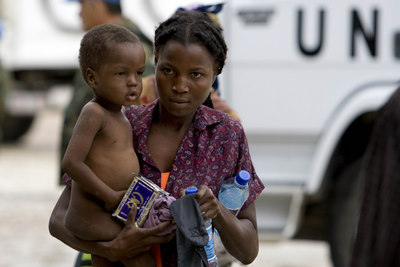

I worked in Afghanistan before the war, and went back into the country right after the Taliban left Kabul.
All in all, I spent quite a few months working with Afghan men and women, and got to appreciate them as people. They had been through hell in the decennia before the war, and when Western forces "liberated them from the Taliban", their hopes were high to have peace at last.
Unfortunately, this is not the case. Today, the insecurity and repression of individuals is probably even more precarious than during the Taliban times. Even more so for the women.
When I flew into Kabul two days after the Taliban left, I saw on Western TV station how news bulletins were announcing that the women finally threw off their burkas, I looked out of the window and saw no changes.
I left Afghanistan late 2002, and according to this video, things only got worse for Afghan women...
Discovered via One Peaceful World

How many of the following key questions can you answer?
1. Which country has the most professionally employed women?
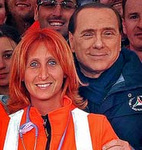 After the Abruzzo earthquake Italian Prime Minister Berlusconi was quoted saying the victims living in tent cities should think of themselves as being on a camping holiday. He hit the news again a day ago by telling a female doctor "I wouldn't mind being resuscitated by you".
The press took it badly, but Dr Carrieri from Milan took up the Prime Minister's defence, saying he had paid her a "gallant" compliment to "take the drama out of the situation". (Full)
Which makes me think of men, women and Italy... After living in Italy for two years, I still find it remarkable how women are given remarks by Italian men. Women who lived in Italy for a while might easily see them as compliments, but foreigners would surely be surprised if not insulted:
Not only is staring almost an art, but it is also usual to be greeted in a shop with a "Ciao Bella!" ("Hi beautiful") and to get a "Arrivederci, cara" ("Bye, sweet").
It is usual to be talked to when sitting (as a woman) alone at a table in a restaurant or bar. Getting whistled at is a daily occurrence, remarks about the way a woman looks or dresses are common. Most women don't react, or (pretend to) see it as a compliment. Only they can tell if deep down inside they do. But if you, as a female tourist, visit Italy, don't be surprised...
More on The Road about Living in Italy
Today, March 8th is International Women's Day. While in the past decennia we witnessed a significant change in attitude both in women's and society's opinion about women's equality and emancipation, there are still places in the world where women suffer greatly.
One of those is Eastern DRC where women are systematically raped as a war strategy between warring fractions. Used as a weapon of war, sexual violence and rape exist on a scale seen nowhere else in the world.
Often successful in its intent to destroy and exterminate, rape is causing the destruction of women, their families, and their communities. While Congo’s women are the backbone of their society, efforts to protect women and girls in the Congo are failing spectacularly.
Here is a video from a shelter for women, victims of sexual assault, in Bukavu in DRC.
The video was produced by Raise Hope For Congo, a movement aiming to protect and empower Congolese women and girls. You can help them, and the women of Congo by raising awareness and rolling up your sleeves with a toolkit they provide.
An extract from CarpetBlog, an excellent blog by a lady living in Turkey.
She describes what happened when arriving at Jeddah Airport (Saudi Arabia):
 This place looks normal on the outside, but it so clearly is not. Social codes and cues for women are impossible to interpret without assistance. Where can we go? What can we do? What do we do if we run into trouble? What kind of trouble could we run into? Will we be able to recognize the trouble when it comes our way? This place looks normal on the outside, but it so clearly is not. Social codes and cues for women are impossible to interpret without assistance. Where can we go? What can we do? What do we do if we run into trouble? What kind of trouble could we run into? Will we be able to recognize the trouble when it comes our way?Some trouble is screamingly obvious. We recognized it immediately when we arrived in Jeddah at midnight, after our passport was taken away. "Where is your brother?" snapped passport control. "I'm sorry. What?" "Your brother. He is picking you up?" "Uh, no. The hotel is picking me up." "Not acceptable." Like a naughty child, we were told to sit next to half-naked Nigerian hajis while arrangements were made to accommodate a rogue foreign woman without a brother. Our resentment brewed, but remained unexpressed. The problem resolved itself, with no intervention from us, and we departed the arrivals hall two hours later, with our brother, the hotel driver. |
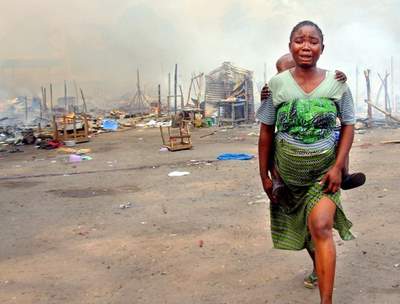
Violence against women is largely unreported. Fear and stigma often prevent women from reporting incidents of violence or seeking assistance.
55 to 95% of women who have been physically abused by their partners have never contacted the police, aid groups or shelters.
Women aged 15-44 are more at risk from rape and domestic violence than from cancer, motor accidents, war and malaria, according to World Bank data. (Details)
Since 9 years, November 25th has been declared "The International Day for the Elimination of Violence Against Women", calling the world's attention to gender-based violence.
Over 1.3 million people signed the petition supporting the fight for this cause. Make your voice count, sign the petition now:

Here are the interesting links I harvested this week:
• Today, more than 600 million girls live in the developing world.
• More than one-quarter of the population in Asia, Latin America, the Caribbean, and sub-Saharan Africa are girls and young women ages 10 to 24.
• The total global population of girls ages 10 to 24—already the largest in history—is expected to peak in the next decade.
• Approximately one-quarter of girls in developing countries are not in school.
• Out of the world’s 130 million out-of-school youth, 70 percent are girls.
• One girl in seven in developing countries marries before age 15. 38 percent marry before age 18.
• One-quarter to one-half of girls in developing countries become mothers before age 18; 14 million girls aged 15 to 19 give birth in developing countries each year.
• 75 percent of 15- to 24-year-olds living with HIV in Africa are female, up from 62 percent in 2001.
And yet:
• When a girl in the developing world receives seven or more years of education, she marries four years later and has 2.2 fewer children.
• An extra year of primary school boosts girls’ eventual wages by 10 to 20 percent. An extra year of secondary school: 15 to 25 percent.
• Research in developing countries has shown a consistent relationship between better infant and child health and higher levels of schooling among mothers.
• When women and girls earn income, they reinvest 90 percent of it into their families, as compared to only 30 to 40 percent for a man.
Source: The Girl Effect
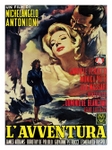 Italy's highest appeal court ruled that married women who commit adultery are entitled to lie about it to protect their honour.
The court gave its landmark ruling after hearing the case of a 48-year-old woman, convicted of giving a false testimony to the police by denying she had lent her mobile phone to her lover.
The appeal court did not agree that she had broken the law. It said bending the truth was justified to conceal extra-marital relationships. (Full)
More post about Italy on the Road to the Horizon.
Picture courtesy VinMag.com
I wonder in which country one would accept a mass of 14,200 registered rape cases in two years, in one province only. Even worse: of which only 287 cases were taken to court. No-one would accept this, right? Right?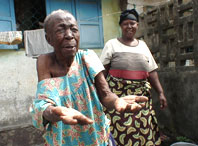 Well, this is the case in South Kivu, a province in Eastern DRC (Congo), according to the UN Human Rights Council. (Full)
Amnesty International reports tens of thousands of women and girls have suffered systematic rape and sexual assault since the devastating conflict in the Democratic Republic of the Congo began in 1998. Rape, sometimes by groups as large as twenty men, has become a hallmark of the conflict, with armed factions often using it as part of a calculated strategy to destabilize opposition groups, undermine fundamental community values, humiliate the victims and witnesses, and secure control through fear and intimidation. It is not unusual for mothers and daughters to be raped in front of their families and villages, or to be forced to have sex with their sons and brothers. Rapes of girls as young as six and women over 70 have been reported. Young girls are also regularly abducted and held captive for years to be used as sexual slaves by combatants and their leaders. (Full)
Help putting an end to violence against women. Sign up:
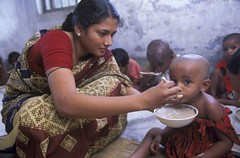 March 8th was to celebrate International Women's Day. This event was hardly noticeable in the international press. A sign?
Some sad statistics:
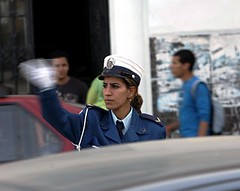 In Algeria, women drive trains, hold positions as judges and make up the majority of students. Nowhere else in the Arab world are equal rights for women taken so seriously.
Moudjed Naima, 32, wears tatty olive-green overalls, green rubber boots and a cap. The small, energetic woman is cleaning a white pickup truck inside and out. She has been employed here for a year, working every day from 8 a.m. to 7 p.m., except Fridays. She got her diploma in photography and computer science, but it was little help -- she was unemployed until she asked for work at the gas station. "I knew there was a woman in charge," she says, "and I started right away." (full post)
Read also this article from the NY Times.
Source: The Other World News. Picture courtesy NY Times.
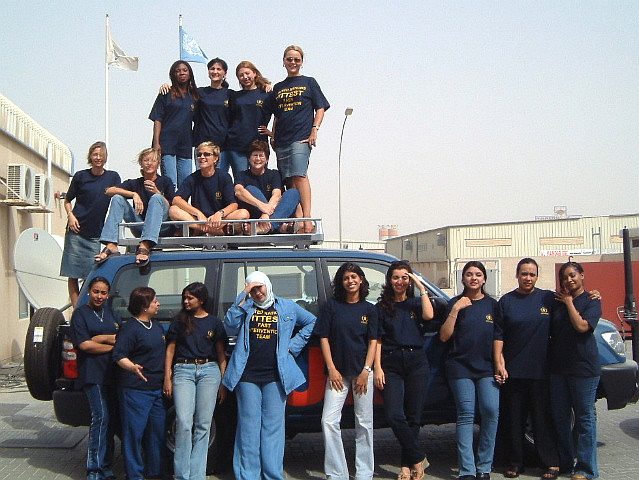
 Twenty women. They became the backbone of the office. Brave women, standing up against ‘The Dudes’, twice as tall and three times as wide as them. They looked up, with their finger pointing sky-wards: ‘No, you will NOT get your ticket before you fill in your previous travel expense claim !’. or ‘No, you can not get into the warehouse to take whatever you want. Fill in this request form, and we will get it to you’. Finger sky-wards… Each time, the FITTEST technician would look down at those tiny little things and grunt his teeth “These… women… “ but in the end they would all shrug their shoulders, and .. comply.
 It was an interesting process to see these two parts of the team becoming one, as time went by.. The male and the female part. The mountain boots and the high heels. The ‘North Face’ and the ‘Louis Vuitton’s. Not only did we, the dudes, start to print on pink, but the ladies also got us to wear pink FITTEST T-shirts. But the dudettes also started to wear the macho yellow-print-on-dark-blue with just as much pride. Symbolic of the female side of the dudes and the male side of the dudettes joining together..Cheers to you, the dudettes of the world ! This is an ode to you. Combining being a mother and a wife, with a professional career. Juggling your professional time between all three jobs: two at home, and one at work. My hat off to you. It is much easier being a man in this world, than a woman. It is always much easier to be a dude than a dudette.
 Peter. Flemish, European, aid worker, expeditioner, sailor, traveller, husband, father, friend, nutcase. Not necessarily in that order. Peter. Flemish, European, aid worker, expeditioner, sailor, traveller, husband, father, friend, nutcase. Not necessarily in that order. |


© Blogger template The Business Templates by Ourblogtemplates.com 2008
Back to TOP


At the bottom, we find Niger, Pakistan, Bahrain, Malawi, Chad, Saudi Arabia and Iran.
Note: We only considered paid employment, and excluded the agricultural sector.