Rumble: The fortune we had... (17)
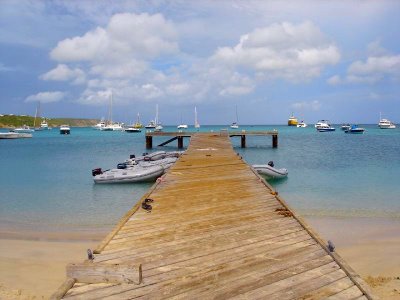
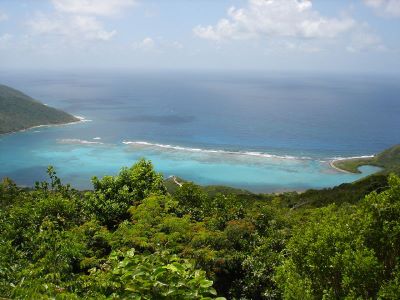
Our anchorage at Road Bay - Anguilla (2007).
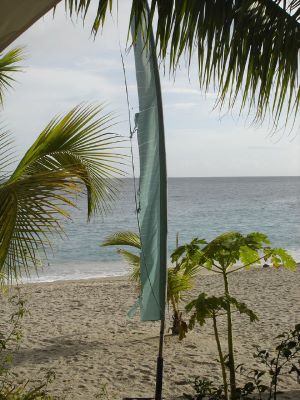
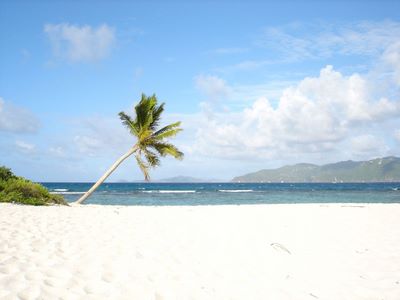
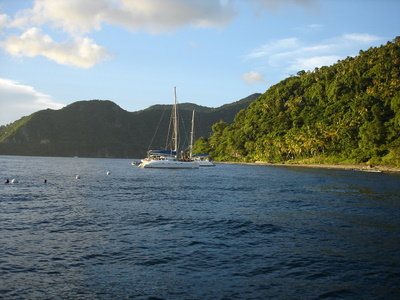
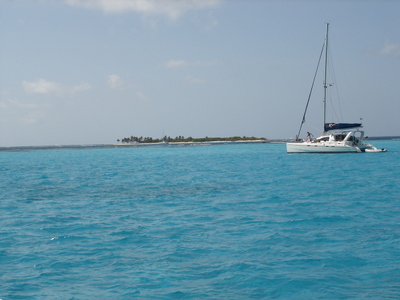
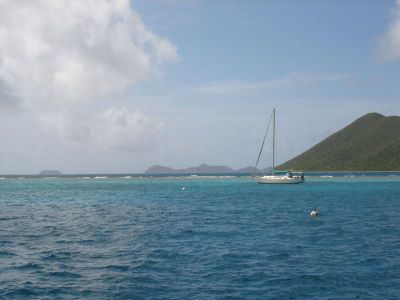
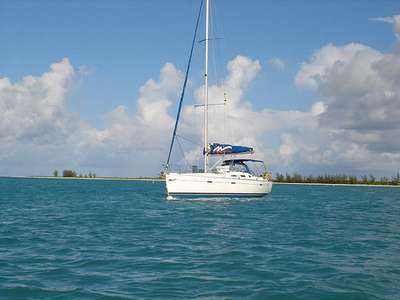
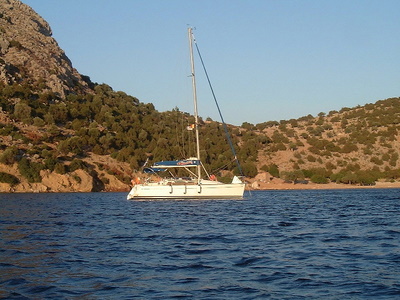
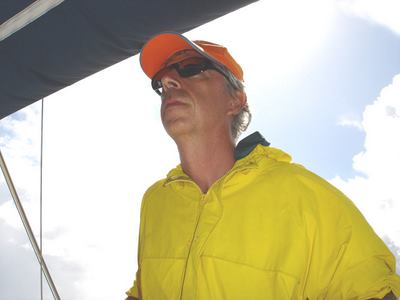
People sometimes get an idealistic idea about how it is to sail a yacht. True, I love sailing. I love the ocean, the freedom, even just the idea of moving on an endless sea merely pushed forward by wind and tides.
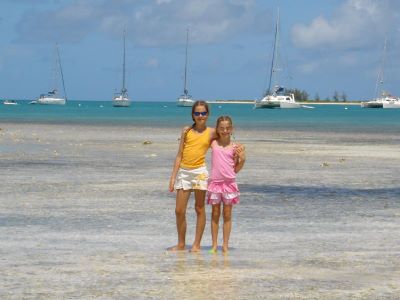
But when I go sailing with the family, it is different. Up comes the endless feeling of responsibility. In our family of four, I am the only one who knows how to sail a yacht. Tine, my wife, knows how to assist maneuvering a yacht in a harbour, and helps me steering the boat against the wind when I raise the sails, and she picks up a mooring buoy like no other, but she does not know how to sail. Our daughters, Lana (now 13) and Hannah (nearly 11), know how to sail a dinghy, but not a yacht.
So my nightmare is "what if something happens to me, while we are under sail"... Imagine for one or the other silly reason, I fall overboard - accidents happen on a yacht -, what then? Or even if it is just when getting into bad weather, where I would need skilled hands?
It is different if you have a crew that knows what to do. As the skipper, you stay on the helm and give simple orders: "Trim the main sail", "reef the foresail", "look up the course to the nearest port"... But when we sail with the family, it is different.
Even though I take every possible precaution to ensure the safety of my loved ones: I have taken every possible course. I have quite some experience in bad weather, in strong tides, sailing in busy commercial shipping lanes, sailing at night, and maneuvering in busy ports. I know how to read weather charts, calculate tides, and all radio procedures. I know first aid, and emergency procedures. I know how to anchor a ship, pick up a man over board, and maneuver in tight quarters. And still, when sailing with the family I always get nervous.
Let me tell you a story how fast things could go wrong.
Back in 2004, we sailed from in the Caribbean from Martinique to the Grenadines. One morning, we lift anchor from Bequia in the Grenadines, to sail to St.Lucia, about 60-70 nautical miles further North. The weather was nice and the forecast was perfect. I made one mistake: I calculated the trip to be a bit shorter if we passed St.Vincent -the next island North of Bequia- via the East, the Atlantic side, rather than the quieter Caribbean (East) side.
When we cut between Bequia and St.Vincent, the weather turned overcast, but the winds and the seas were quite calm. As we sailed past St.Vincent's East side, the wind picked up to about 15 knots, still quite easy, even though I could see some isolated squalls coming our way. I kept an eye on them and changed course regularly to pass in front or in the back of them. As we sailed along, we saw the skies getting darker, and I did not have a comfortable feeling. I put in a reef in the main sail, just in case, but did not get too worried until I saw a real dark squall heading our way, just as we were getting close to the North of St.Vincent.
I ordered the family to put on their life jackets, and clipped the kids with a lifeline onto the ship. I clipped myself onto the lifeline, put the ship on autopilot and went to the bow of the ship to put in the third reef in the main sail. Just as I stood hooked onto the main mast, it started raining, and the wind picked up. Tine dropped some of the main halyard so I could put the reef in the main sail. I got soaked by the spray and the rain. By the time I got back into the cockpit, the wind had picked up to 35 knots, turning and twisting from all sides. It was then I remembered someone warning us of the usual foul weather due to the huge mountain at the North of St.Vincent.
The sea turned into a boiling pot, with waves coming from all sides, spraying over the side of the boat, soaking my crew. We already had our rain jackets on, but it got really cold. The wind gusted from all directions, making it difficult to keep a course and to keep the sails filled, so the boat would hold a steady angle.
The rain gusted down, and the visibility was close to nil. Long had we lost sight of land. I had plotted our course, so I knew we were about five miles off land, but also knew there was no harbour this side of the island. It took probably half an hour until I realized something was wrong. The wind had shifted 90 degrees, and to keep the sails full, I had lost my bearing. The compass and my GPS indicated we were heading straight for land, sailing West instead of North...
I needed both hands at the helm, and told Tine we were getting off course. Once the going gets rough, Tine is all business. Even though I know she is not comfortable in foul weather (that is an understatement), she stood up, and told me calmly "Tell me what to do!". I told her to "take the green rope, put it over a winch clockwise, and to crank it up, until I told you to stop", an order which for an experienced crew would be "pull in the main tight". She did it perfectly. Next came "take the white and black rope, put it onto a winch, open up the clamp of the white rope, and start winching in the white and black rope", a order which would be "pull in the foresail". I revved up the engine, changed the course back to North and headed into the wind.
The wind was howling, the rain came down in buckets, and the waves gushed over the bow of the ship. We continued head-on into the wind, for what seemed an eternity, but in reality it was probably just one hour. The rain came down that violently I could see the dinghy, which we were towing behind our yacht, filling with water to the rim, slowing down the ship considerably. I kept on hoping that the engine would not fail as there was no way we would be able to sail on this course, head on into the wind. But the engine purred like a cat, and after a while the rain became lighter and all of a sudden, the kids shouted "Look there: dolphins!".
That is when I knew all would be ok. Dolphins have always been a token of good luck for me. So it was no surprise that as the pod of dolphins swam alongside the ship, the wind turned again, the rain stopped and the seas calmed down. The squall had passed us, with nothing else but clear skies ahead of us.
I put the ship on autopilot again, and pulled the dinghy closer to the yacht. I just had to heave out the water from the dinghy as it was slowing us down too much. I told Tine to keep an eye on the course, and got ready to jump into the dinghy, knowing if I would miss my jump, there was no way for me to get back onto the ship. So I jumped, heaved all water out of the dinghy, pulled myself onto the ship again, and away we were.
The silver lining of that trip came soon: the seas became dead calm, with a broad side steady wind blowing at 15 knots. I put all sails back up, and trimmed them. And boy, we sailed! With our 35 ft yacht, towing a dinghy, we sailed at 10-11 knots, at a perfect angle, and with perfectly trimmed sails for hours, until we reached St.Lucia.
The strange thing was that the kids had no idea in what danger we had been. The only thing they said "Dad that was exciting, when can we do that again?". Kids!
Some lessons learned:
- Never pass an island in the Caribbean on the Atlantic side.
- Always be prepared for the worse, and hope for the best.
- Be aware of high mountains in the vicinity of where you sail. Often the weather changes near them.
- Better one reef too much than one too little.
- Be prepared, be prepared, be prepared.
- When sailing with kids, make sure they always wear their safety jackets and are hooked onto the boat, in foul weather. You should be able to concentrate on the ship, and not have to worry where the kids are, and what they are doing.
- When things go bad, kids have to get into the habit of following orders without questioning...
More about sailing on The Road.
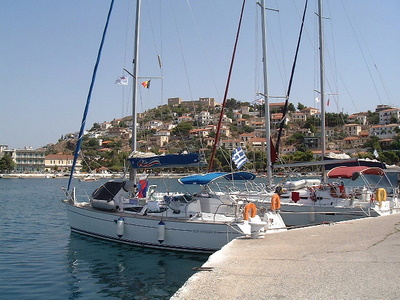
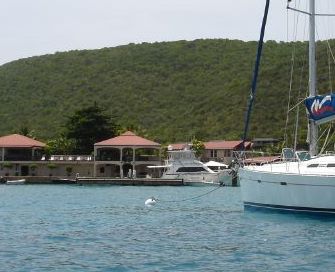
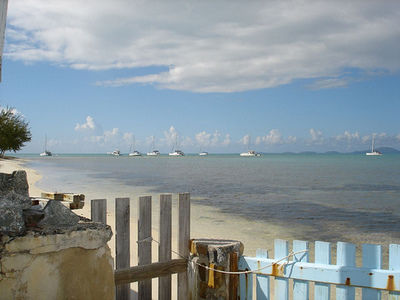
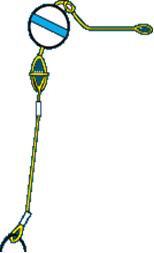 The principle of mooring, “fixing a yacht to a mooring buoy”, is pretty easy: A rope with a loop sticks out of a floating ball. The rope is connected to a chain anchored onto the sea bottom. The skipper approaches the mooring buoy against the wind while someone stands on the bow (the front end of a ship), to grab the loop with a boat hook (a long stick with a plastic hook on it). A rope is pulled through the looped mooring line, and both ends are fixed onto the bow of the ship.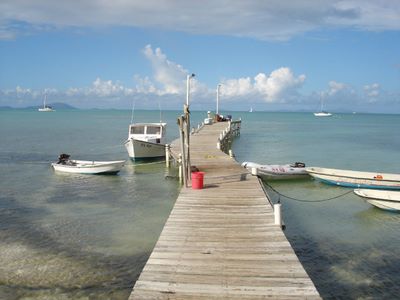
 We reef the sails, as we see the clouds gathering. While we are still sailing in the sun, the darkness packs at the horizon. That is how it goes in the Caribbean this time of the year: sunshine one moment, rain the next. Under the threatening clouds hurrying towards us, we see the white foam on the waves. The wind will pick up soon. We are sailing to Petit St Vincent in the Grenadines. Everyone calls it “PSV”, for short. An island barely one mile in diameter, covered with palm trees and bush. It is not far anymore, maybe another half an hour of sailing. But we don’t not make it in time. The rain catches up with us, and before we know it, we are engulfed in a dense curtain of water gushing down. I studied the pilot book this morning, and know how the anchorage looks like, by heart. The GPS guides me towards the entrance between the coral heads and the beach.
 As we steer into the anchorage, we put the kids below deck, drop the sails, and start the engine. Tine goes to the bow, ready to drop anchor. I steer the boat right in-between the other anchored ships. The rain gushes down. Visibility is only ten meters, sometimes even less. We loose sight of the other boats. Even though we motor slowly, sometimes an anchored boat pops up through the curtain of rain, out of no-where it seems, when it is almost too late to avoid a collision. The wind is strong and gusty, shifting often 90 degrees. A sailboat, and certainly one like ours with a short keel, and very beamy – flat wide bottomed – gets easily pushed around by the wind. Once the boat starts turning with the wind, there is no way to stop the momentum. Then you just HAVE to turn.. It makes it difficult to maneuver between anchored boats, all swinging on their anchor chains, in the stormy wind… But we do well, find a proper spot, and drop the anchor in one go. Phew!
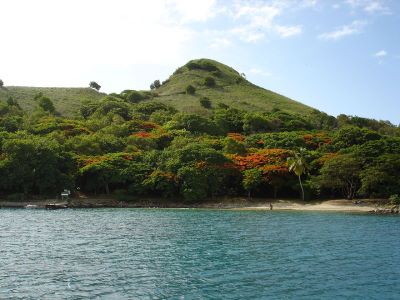
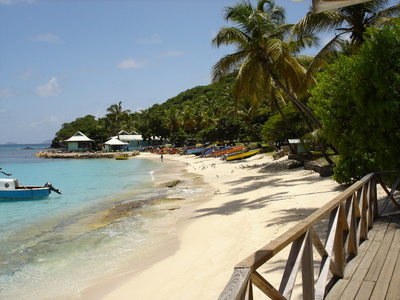
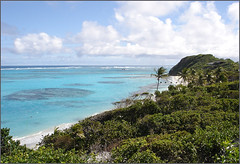 It storms and rains the whole night, but the next morning is bright and sunny, revealing the small paradise we are anchored in. Hardly any clouds left. The sea is clear light green-blue, several fishing terns are gliding high up in the sky, without moving their wings. A soft breeze moves through the leaves of the palm trees bordering the beech of bright white sand. Paradise once more.
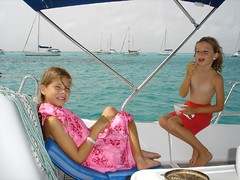 When I get back to our sail boat, Hannah, our youngest, stands on the bow of our ship, shouting and dancing “My dad is a superhero! Superdad in action! My dad can do anything!..” Lana gives me a hug. “Dad, I am proud of you. The people on the other boats were just watching, but you DID something… Did you those guys give you anything to thank you?” I tell them when we do good to others, somewhere we will be rewarded by something good ourselves..
 Peter. Flemish, European, aid worker, expeditioner, sailor, traveller, husband, father, friend, nutcase. Not necessarily in that order. Peter. Flemish, European, aid worker, expeditioner, sailor, traveller, husband, father, friend, nutcase. Not necessarily in that order. |


© Blogger template The Business Templates by Ourblogtemplates.com 2008
Back to TOP



The Road's Dashboard
Log in
New
Edit
Customize
Dashboard